Index
Home
Introduction
Configuring XPax
Using XPax
Main Screen
Manifest Screen
Diagram Screen
Aircraft Screen
Report Screen
Options Screen
Networked Configuration
CreditsAppendix
SimConnect Troubleshooting
|
|
Welcome To XPax - A Passenger Simulation Add-on for FSX and
FS9! |
Xwapserieslat+mallu+insta+fame+srija+nair+bo+free
Kerala culture has had a profound impact on Malayalam cinema. The state's rich literary tradition, folklore, and mythology have provided a wealth of material for filmmakers. The themes of many Malayalam films are inspired by Kerala's cultural practices, such as the traditional dance forms of Kathakali and Koothu, and the festivals like Onam and Thrissur Pooram. The films often showcase the state's lush landscapes, highlighting the beauty of its backwaters, hills, and forests.
The 1950s to 1970s are considered the golden age of Malayalam cinema. During this period, filmmakers like Adoor Gopalakrishnan, Kunchacko, and Ramu Kariat produced films that showcased Kerala's rich cultural heritage. Movies like "Nokketha Doorathu Kannum Nattu" (1952), "Chemmeen" (1965), and "Mooladhaaram" (1969) became classics, exploring themes of social justice, love, and human relationships. These films not only entertained but also educated the audience about the importance of preserving traditional values and cultural practices.
The first Malayalam film, "Balan," was released in 1938, marking the beginning of a new era in Kerala's cultural scene. The early days of Malayalam cinema were characterized by social dramas and mythological films, which were heavily influenced by traditional Kerala culture. These films often depicted the lives of common people, their struggles, and their values, providing a reflection of the state's social and cultural fabric. xwapserieslat+mallu+insta+fame+srija+nair+bo+free
Malayalam cinema and Kerala culture are inextricably linked, with each influencing and reflecting the other. The film industry has played a significant role in shaping the state's cultural landscape, showcasing its rich cultural heritage, and addressing socially relevant themes. As Kerala continues to evolve and grow, its cinema will undoubtedly remain a vital part of its cultural identity, reflecting the state's values, traditions, and aspirations. The relationship between Malayalam cinema and Kerala culture is a testament to the power of art to shape and reflect the cultural identity of a community.
Malayalam cinema, also known as Mollywood, has been an integral part of Kerala's culture and identity for over a century. The film industry has not only entertained the masses but also played a significant role in shaping the state's cultural landscape. In this essay, we will explore the relationship between Malayalam cinema and Kerala culture, highlighting the ways in which they influence and reflect each other. Kerala culture has had a profound impact on Malayalam cinema
Malayalam cinema has a long tradition of addressing socially relevant themes, such as poverty, inequality, and corruption. Films like "Swayamvaram" (1972), "Udyanapalakan" (1973), and "Papanasam" (2015) have depicted the struggles of common people, highlighting the need for social change. These films have not only entertained but also inspired the audience to think critically about the social issues affecting Kerala.
In recent years, Malayalam cinema has witnessed a new wave of filmmakers who are experimenting with innovative themes and storytelling styles. Directors like Adoor Gopalakrishnan, Hariharan, and Lijo Jose Pellissery have gained international recognition for their films, which showcase Kerala's cultural diversity and complexity. Movies like "Take Off" (2017), "Sudani from Nigeria" (2018), and "Angamaly Diaries" (2017) have become critically acclaimed, reflecting the changing tastes and preferences of modern Kerala audiences. The films often showcase the state's lush landscapes,
Malayalam cinema has played a significant role in promoting Kerala culture, both within the state and globally. The films have showcased the state's rich cultural heritage, including its traditional music, dance, and festivals. The movie "Onam" (2018), for instance, depicted the grandeur and significance of the Onam festival, highlighting its importance in Kerala's cultural calendar. |
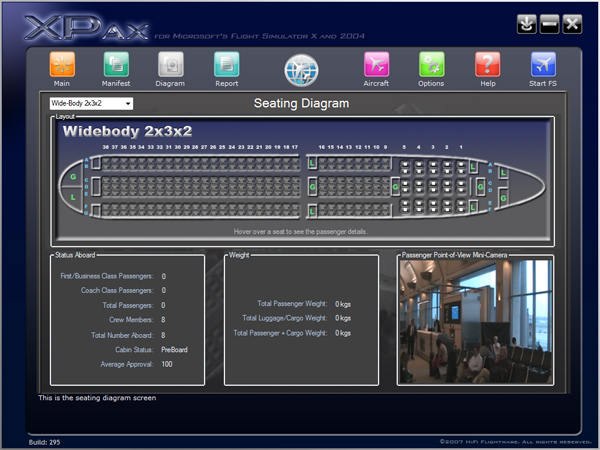
Passengers and their individual statistics
including health and approval rating are
constantly updated based on the performance of
the flight. The entire flight process, from
pre-boarding to deplaning, is simulated and
supplemented by multimedia content including
audio and video.
|
 |
Cabin attendants, Gate Attendants and Captain
voice sets are included and fully customizable
using the easy options screen. New voice sets
can be recorded with a few clicks of the mouse.
Video, provided in a “Passenger point-of-view”
format is also fully customizable within
the interface with bit of simple movie
production.
|
XPax is designed to run along-side FS and
automatically senses when certain phases of the
flight take place, launching appropriate events,
audio and video.
|
With XPax, everything you do is monitored
closely and the passengers will react
accordingly. Using abrupt control movements,
climbing or descending too fast, obtaining
unusual attitudes, too many g-forces, aggressive
taxi turns or a hard landing will all reduce
passenger satisfaction and in extreme cases will
cause injuries!
|
Many other features, as well as a comprehensive
user guide and top-notch HiFi customer support
are all included.
|
| Features |
Kerala culture has had a profound impact on Malayalam cinema. The state's rich literary tradition, folklore, and mythology have provided a wealth of material for filmmakers. The themes of many Malayalam films are inspired by Kerala's cultural practices, such as the traditional dance forms of Kathakali and Koothu, and the festivals like Onam and Thrissur Pooram. The films often showcase the state's lush landscapes, highlighting the beauty of its backwaters, hills, and forests.
The 1950s to 1970s are considered the golden age of Malayalam cinema. During this period, filmmakers like Adoor Gopalakrishnan, Kunchacko, and Ramu Kariat produced films that showcased Kerala's rich cultural heritage. Movies like "Nokketha Doorathu Kannum Nattu" (1952), "Chemmeen" (1965), and "Mooladhaaram" (1969) became classics, exploring themes of social justice, love, and human relationships. These films not only entertained but also educated the audience about the importance of preserving traditional values and cultural practices.
The first Malayalam film, "Balan," was released in 1938, marking the beginning of a new era in Kerala's cultural scene. The early days of Malayalam cinema were characterized by social dramas and mythological films, which were heavily influenced by traditional Kerala culture. These films often depicted the lives of common people, their struggles, and their values, providing a reflection of the state's social and cultural fabric.
Malayalam cinema and Kerala culture are inextricably linked, with each influencing and reflecting the other. The film industry has played a significant role in shaping the state's cultural landscape, showcasing its rich cultural heritage, and addressing socially relevant themes. As Kerala continues to evolve and grow, its cinema will undoubtedly remain a vital part of its cultural identity, reflecting the state's values, traditions, and aspirations. The relationship between Malayalam cinema and Kerala culture is a testament to the power of art to shape and reflect the cultural identity of a community.
Malayalam cinema, also known as Mollywood, has been an integral part of Kerala's culture and identity for over a century. The film industry has not only entertained the masses but also played a significant role in shaping the state's cultural landscape. In this essay, we will explore the relationship between Malayalam cinema and Kerala culture, highlighting the ways in which they influence and reflect each other.
Malayalam cinema has a long tradition of addressing socially relevant themes, such as poverty, inequality, and corruption. Films like "Swayamvaram" (1972), "Udyanapalakan" (1973), and "Papanasam" (2015) have depicted the struggles of common people, highlighting the need for social change. These films have not only entertained but also inspired the audience to think critically about the social issues affecting Kerala.
In recent years, Malayalam cinema has witnessed a new wave of filmmakers who are experimenting with innovative themes and storytelling styles. Directors like Adoor Gopalakrishnan, Hariharan, and Lijo Jose Pellissery have gained international recognition for their films, which showcase Kerala's cultural diversity and complexity. Movies like "Take Off" (2017), "Sudani from Nigeria" (2018), and "Angamaly Diaries" (2017) have become critically acclaimed, reflecting the changing tastes and preferences of modern Kerala audiences.
Malayalam cinema has played a significant role in promoting Kerala culture, both within the state and globally. The films have showcased the state's rich cultural heritage, including its traditional music, dance, and festivals. The movie "Onam" (2018), for instance, depicted the grandeur and significance of the Onam festival, highlighting its importance in Kerala's cultural calendar. Requirements:
-
Microsoft Flight
Simulator X or Flight Simulator
2004
-
FSX Requires
Service Pack 1 (which includes
SP1 SimConnect), and FS9
requires FSUIPC v3.75 or later
(available free from
http://www.schiratti.com/dowson.html)
-
Windows XP or
later (earlier operating systems
not officially supported)
-
1GB+ RAM
-
500MB+ Free Hard
Drive Space
-
.NET 2.0
(included with installation
package)
-
Windows Media
Player v11 or later
-
Internet
Explorer v7 or later
|
|
|

