Only a few days left to make it a Christmas gift · Order before Dec 15
Free shipping on orders over $365/€319
14-Day Returns* · 2-Year Warranty · Worldwide Shipping, US Included
Want it under the tree? · Order before Dec 15
Free shipping on orders over $399/€350
14-Day Returns*
2-Year Warranty
Worldwide Shipping, US Included
On the anniversary of Lucas's disappearance, they unspooled one canister together, not to expose but to remember. The frames flickered: Lucas younger than they knew, running across a set, hair catching the light. They laughed, then the film melted into static and then into a single clear image—a shot of Maya, in the audience of a tiny theater, crying at a scene she had once edited. She did not remember filming it. Lucas held her hand, grounding her to the present.
Months later, Maya found herself restoring old footage again—this time for films that wanted to be preserved, not consumed. Lucas helped when he could, learning to slow his speech, to trust a day that wasn’t performance. They bought no van. They built a small workshop where actors and technicians could repair reels and recover what CineVood had folded away.
Maya refused the offer to accept. She wanted Lucas back whole. Elias proposed an exchange: retrieve the canister, and they would release the footage. The price: Maya had to act in a scene and surrender one memory to the canister in exchange.
Maya demanded to know where her brother was. Elias smiled, let the stage lights pulse slower, deliberately. cinevood net hollywood link
Maya Ortiz thought the internet was a place of second chances. Three years after her brother disappeared on a low-budget film set, she lived on edits and abandoned projects—cutting footage for indie directors, flipping stolen equipment for cash, and nursing the small hope that one last lead would give her answers. The lead arrived as a link: cinevood.net/hollywood.
Maya listened until the reel produced a coordinate and a phrase: "Hall Twelve — under light." It was old film jargon, a place in the backlot where a floodlight rigged for a moon scene had been removed years ago—an underground compartment. She and Rafi drove there.
They called it "capture"—a process where performers submitted to scenes so immersive their memories blurred with character. The captured footage, filmed in that glass canister, held more than images; it retained echoes—trauma, joy, and a sliver of the subject's will. CineVood's patrons watched to feel those echoes: the ultimate authenticity. On the anniversary of Lucas's disappearance, they unspooled
The footage opened on a shaky, handheld camera surveying a backlot dressed as a decayed L.A. street. Dust motes glinted in sodium lights. Then the camera turned, and there he was: Lucas Ortiz, lit from below, eyes vacant as if the light itself had hollowed him. He mouthed something the audio barely caught—an address and a date. The file ended with a soft click, like a tape running out.
Under the cracked stage, they found Hall Twelve's trapdoor, rusted. Inside, a room with an old projector and a lattice of mirrors. At its center, a person—thin, eyes bright as if suddenly awake. Lucas. He was skin and bone, alive in a way that terrified Maya: not hollow now, but stitched into something else—longer in mind, fractured in time. His hands moved like someone learning a language again.
But beneath the footage, the projector leaked a second signal: a heartbeat irregular and human. Rafi enhanced the signal and played it again. Between frames, the heartbeat became speech, raw audio shifted into syllables, then words—the canister had recorded not only scenes but a tether: Lucas’s voice, pleading from within the reel, trapped but aware. She did not remember filming it
Maya stepped back; anger rose. “You can’t keep him.” She lunged for the camera, reckless and furious. Elias had anticipated her: a soft snare of thread tightened, and the world tilted. The projector's hum surged; the light sucked at her memory—at the laugh, at the van dream, at the last ordinary Sunday. The room narrowed to an aperture.
“No,” she said, but the memory came anyway—the last night with Lucas before he vanished, the laugh he gave when they promised to buy a van and chase forgotten film sets forever. She felt the memory like a weight being pulled by invisible hands. Elias raised the glass canister; a pale light inside stirred.
The page was plain: a single video thumbnail, a time stamp, and a username—“VoodooReel.” The title read: "Final Cut — Night Two." Without thinking, she clicked.
Maya didn’t sleep that night. She traced the address—an abandoned soundstage on Navarro Avenue—found a photograph of the building and remembered rumors about a clandestine collective of filmmakers who performed "immersive realism" workshops. They called themselves CineVood: a tight-knit group that fused ritual theater with guerrilla filmmaking. Rumor said they recruited by invitation only and erased anyone who crossed their aesthetic.
After the screening, the theater’s lights went up. People murmured legal words—ethics, consent, regulation. Computers and phones streamed the footage in a scramble that felt like justice, then like a feeding frenzy. The publicity fractured CineVood’s network; patrons withdrew, sponsors shied away, and law enforcement opened inquiries. Elias gave one interview where he said, simply: “Art asks payment.”
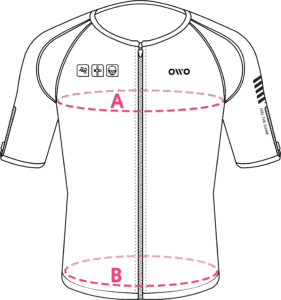
Measure your chest (A) and hips (B) following our indications.
The reference measurement will always be the larger of the two (A or B).
Look in the chart to which size corresponds to that measurement.
| Size | Reference measurements | |
|---|---|---|
| Inches | Centimeters | |
| 2XS | 25.6 – 29.4 | 65 – 74 |
| XS | 29.5 – 32.6 | 75 – 82 |
| S | 32.7 – 36.1 | 83 – 91 |
| M | 36.2 – 39.7 | 92 – 100 |
| L | 39.8 – 42.8 | 101 – 108 |
| XL | 42.9 – 46.3 | 109 – 117 |
| 2XL | 46.4 – 49.9 | 118 – 126 |
| 3XL | 50 – 53 | 127 – 134 |
| 4XL | 53.1 – 55.9 | 135 – 142 |